Grooming A Child’s Mind for Education, It’s A Different World – #2R1WM

By Kirk Clay

“Mercy, mercy me, things ain’t what they used to be.”— Marvin Gaye

Can you believe this past school year ended before June? All it took was a global pandemic and boom. Then protests around the world ignited a movement and has made this summer vacation a teachable moment. I guess the fact that the economy is in lousy shape adds to the dynamics and may prove to be far more significant than we know. These events make this the most momentous summer in recent history and lead parents, teachers, and administrators around the world to consider reevaluating their summer teaching plans.

As this summer kicks into full swing, it is clear that there are several important events that we, as educators, will need to address with students next school year. We may never witness another summer like this again, but this summer will always be with us, and we have to help children make sense of their new world. Remember, emotions, trauma, and memory, like all brain functions, are not isolated to one region of the brain. This function is what makes learning possible, but it can also negatively affect a child’s life experiences if not handled appropriately.

First, we must introduce the concept of “systems change.” Cross-cultural experts often portray people of color as incidental as they relate to the broader “world” sphere of human rights. Moreover, some people seem to find it challenging to connect the size of these peaceful protests to evidence-based inequality and demographic trends. Sure, it’s easy for an adult to recognize that there is a specific cultural relevance to what’s happening, but children need us to acknowledge and unpack the broader cultural dynamics. We must help young students understand how massive protests and their intensity levels are connected to a lack of resources and social investment in our communities.

More specifically, this generation grew up in a different world than we have now. There is astounding duplicity of national conscience with those that believe the first African American president’s election was both a post-racial and economic inequality high watermark. The fact is that years ago, in places like South Carolina, their parents lit the torch that led an African American candidate to the Presidency. But this didn’t just happen on a wing and a prayer. These communities began to connect the dots in early 2006. Moreover, these communities did not follow the “manufactured” models for civic engagement, and they authentically invested their hearts in what they believed.

We must help our students understand how the heart and the head are connected to education. Our classrooms are where they learn about the world around them and share big ideas. We must intentionally educate them about social advocacy and social distancing in our classroom teaching. Also, we have to share strategies to decuple traumatic experiences from their learning memory so they can retrieve information more successfully. Remember how the mind works, creating pegs in our brains on which we hang specific pieces of information that we witness, read, or discover. The trick is to facilitate them learning social advocacy, observing current health events, reflecting on what works, and encouraging them to take action.

In particular, we should help them understand how significant social and healthcare investment in engaging their communities will impact change throughout the world. We know that “hope” and “change” won’t have a chance if we don’t expand democracy to all Americans. The truth is that we need actual systems change, and many of these students live in neighborhoods that could be the difference if given a chance.

For example, POC in Florida make up 29.5% of the Citizen Voting Age Population and 69% are registered to vote. 

  • In 2008, POC made up 28.9% of the vote share in the general election, although more than a third did not vote (37.7%). 
  • Imagine what could happen in 2020 if we energize and turn out every eligible voter? Especially in places like Jacksonville, FL, where there are over 200,000 “Key” POC voters. 

We all have benefited from a good education and gained valuable tools from our parents, teachers, and neighborhood schools. There is no doubt that today’s students are more than capable of successfully navigating their feelings through this moment. That’s what keeps me hopeful. Their interests represent our shared guiding principles. Once in classrooms, students will have the opportunity to work towards creating social, cultural, and economical solutions that will heal our world. At the same time, they will benefit from the collective social, civic, and economic advancements we have made over the years. Our job is to give them the support they need to advocate for themselves and teach them how to manage themselves in this new environment. If we invest our educational resources in our children, we will most likely have a positive return on that investment, and we all will capitalize on new opportunities with communities that share our interests.

To be continued …

Kirk Clay is the President of Capitol View Advisors — a collaborative acting on its values in creative and strategic ways to connect communities with the information and resources they need to support and further their aspirations.

The Digital Use Divide, Leave No One Behind – Lessons from Rev. Dr. Joseph Lowery Part 2 #2R1WM

By Kirk Clay

“To share is precious, pure, and fair. Don’t play with something you should cherish for life. Don’t you wanna care, ain’t it lonely out there?” — Marvin Gaye

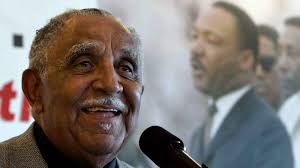
Rev. Dr. Joseph Lowery would say, “we in the movement promised never to leave anyone behind, and everyone is important to the movement, so just leave no one behind, then we’ll be alright.” The truth is that too many schools in low-income communities and communities of color are left behind. They do not have access to technology, technical support, and high-speed internet services needed to close the digital divide.

Many school technical support staff are among the group of workers negatively impacted by the Covid-19 – few of whom have meaningful work now. If their schools close, some will be tasked with new duties, such as copying “distance learning” packets for families to pick up weekly. Copying is not an appropriate use of their skills, not to mention they will not be focusing their talent on closing the digital divide. Moreover, this may contribute to the digital divide, especially when many school systems across the country are already considering closing for the rest of the school year and already have insufficient technological capabilities.

Plan

When students of color gain access to quality technology, it helps them thrive in education by allowing them to connect, keep up, and learn from their teachers as well as their peers. But most students in need of technology have trouble obtaining, gaining access to it, and acquiring appropriate materials. A digital divide is a gap between students who have access to the Internet and devices at school and home, and those who do not. 

 Additionally, with many school buildings closed due to Covid-19, there is a “digital use” divide as well — the gap between students taught to use technology in an appropriate, active, and creative way to support their learning and those who are not. Note that some students mainly use technology for passive content consumption. These students may be found on their bed with headphones plugged in “multitasking” and listening to music while completing their assignments. The truth is — despite what students may think, research tells us that there is no such thing as successfully multitasking while studying. On the contrary, the mind switches back and forth between tasks, and that decreases learning. So listening to music may help with anxiety but do so while performing memory recall tasks weakens scores. 

 Get Active

Given that many students of color attend schools that do not yet have access to or are not using technology in ways that can improve learning for all, we must elect policymakers that will support our interests to fix this problem. What’s more, many homes in rural communities do not have the necessary technology or access to high-speed internet service either, and there are enough voters in those areas to change this dynamic.

This political landscape resembles that of November 3, 1998, in Georgia, where the hyper-partisan nature of politicians motivated communities of color to demonstrate their concerns through the power of the vote. In 1998 Voters of Color were 30% of the vote share. Pro-education candidates won the governorship, retained control of both houses of the legislature, and candidates of color made significant gains.

  • Although 2010 census data showed that Atlanta only grew 0.8% to 420,003, neighboring Athens-Clark County grew by 15% to 116,714. That significant growth helped to give Georgia a new congressional seat plus an extra Electoral College vote.
  • People of color in Georgia make up close to 35% of the citizen voting-age population, and most of those registered and voted in 2008. 
  • POC made up 34% of the vote share in the 2008 general election. This number increased to 35% in 2010. 
  • The potential impact would be significant in 2020 if every eligible person of color voted. Especially in cities like Atlanta and Athens-Clark County, where there are over 230,000 “Key” Voters of Color combined.

Here’s what change looks like

1. Address the Gap in Technology and Internet Access for students of color by expanding broadband access across the country, with particular investments in rural and low-income communities, to ensure a national standard of internet access, quality, and affordability.

2. Invest in closing the digital use divide for students of color by providing targeted resources to communities of need that provide technical support, materials, and training for students of color to use technology in an appropriate, active, and creative way to support their learning.

 Will this be as easy as it sounds? Not at all, just as it took time for me to adjust to the civil rights principles during the “Mississippi Voter Whistle Stop Tour” – we can’t expect our children to adjust to distance learning overnight. Students of color have to be encouraged to be independent learners, and we must remain patient as they find their way through the system. Just as Rev. Dr. Joseph Lowery was patient with me on that day, the entire educational community must remain patient, vigilant, and put forth an effort to enact policies that will close the digital divide.  

To be continued …

Kirk Clay is the President of Capitol View Advisors — a collaborative acting on its values in creative and strategic ways to connect communities with the information and resources they need to support and further their aspirations.
The Impact Of Ron Brown’s Legacy #2R1WM

“To be an artist is a blessing and a privilege. Artists must never betray their true hearts. Artists must look beneath the surface and show that there is more to this world than what meets the eye.”  

– Marvin Gaye –  

By Kirk Clay

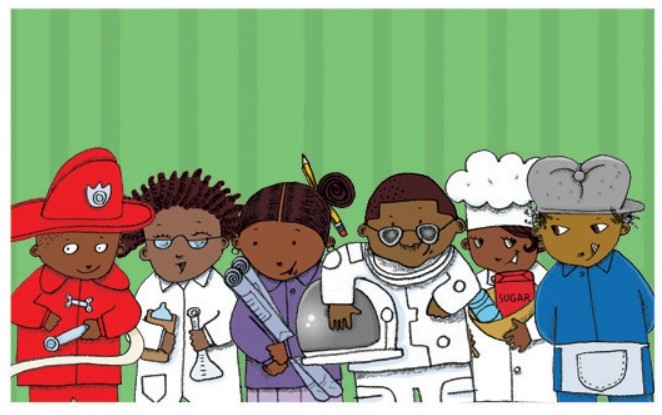
Parents, teachers, and many students across America are now engaged in an endeavor that occurs every summer — they are on “summer vacation.” Some teachers will take a trip for a much-needed break “away from it all.” Others are set to visit their family while some will be busy earning extra money on short term projects like teaching summer school. Though it will be a diverse mix of experiences, please make no mistake that their collective activities will have a significant impact next year.

“It is a tool for reflection, discovery, correction, and action.”


Similar to all educational systems in the U.S., this is a critical moment for Washington, DC school communities. For the learning community at Ron Brown College Preparatory — an innovative public high school in Washington, DC that serves male students of color — this moment and movement are even more critical. Yes, this summer vacation brings with it the same introspection, joy, and liberation that most educational communities will enjoy, and yet it is still a bit different. The difference lies with the singular purpose of this school. This community aspires to connect talented young males of color to a multitude of opportunities, therefore providing them with a path to live free from the fear of poverty, violence, and death.


This concept originates from the radical but straightforward vision set out by a collection of innovative community leaders, lawmakers, and educators, which asserts that “America will successfully teach every child regardless of zip code.” I know this sounds easy, but as someone that spends time in the classrooms at Ron Brown, I see all of the remarkable efforts, genius, and curriculum implementation happen every day. Honestly, the teachers, care team, and administrators are some of the most committed, supportive, and sophisticated educators I have ever met. I am routinely impressed by the teachers as they executed their curriculum and the care team as they implemented “restorative” practices. The way they give “props” for student accomplishments while having courageous conversations on the areas that we all can improve is inspirational.


This reminds me of the school’s namesake. Ron Brown was the 1st black Commerce Secretary for the United States of America. Note that this was a massive deal at the time, considering not many African Americans had a position with that level of responsibility in the 90s. I met Secretary Brown the summer I first arrived in Washington, DC. I was amazed by his intellect, leadership skills, and fashion sense. He would often ask about “my people,” and I would talk with him about my grandmother that lived in the area before we would “talk shop.” Later, he would give me tips on picking the right combination of shirts and ties.


He taught me that the summer is like a mirror. “It is a tool for reflection, discovery, correction, and action.” His point was that I should use my summer to reflect on life, assess what changes need to be made, plan my next steps, and implement my new learning. What’s funny is that educators have always used their summers to innovate. The only difference is that this summer, we have a little more to reflect on than usual.

To be continued…

#

Kirk Clay is the President of Capitol View Advisors — a collaborative acting on its values in creative and strategic ways to connect communities with the information and resources they need to support and further their aspirations.
Pitching and Defense Wins Games Like Organizing + Redistricting Wins Economic Justice

By Kirk Clay

People ask “what makes Kevin Kiermaier so special?” Is it his home run percentage? No. How about his batting average or the RBIs he produces? Nope. He’s an average hitter but his 5.0 defensive WAR (a statistic for how many wins a team has with or without a player) in 2015 sets him apart from the pack. What’s more, he has ranked in the top ten of “most valuable position players” in baseball two seasons straight.

What makes him and many players like him so impactful is their defense! They catch a lot of balls and that wins games. Accordingly, baseball clubs across the league are investing more in “golden glove” contenders to improve their defensive capabilities in hopes of gaining a competitive advantage. Why? Baseball’s new crop of high-powered pitching “stunners” are regularly producing games with 2-1 scores therefore teams have to defend better to win.

The same is true in political settings across America today– economic and social justice initiatives are being decided by close margins. What’s sad is that the people who most need our help are falling further behind while economic and social prosperity is thriving in other communities. It’s clear that America is at a watershed moment and we have to defend our values to win in communities that are affected by economic and social justice issues.

Meanwhile, teams of institutions and politicians are creating strategies for winning the next decade of policies. State houses, city councils and many other institutions are quietly preparing for what will soon decide electoral boundaries for our representatives – the census, reapportionment, and redistricting. These strategies will have a major impact on who is counted, how much resources a community receives, who votes in what jurisdiction, and who is elected to public office.

The U.S. Constitution states that America will count every person every decade and use the results of that count to apportion seats in the U.S. House of Representatives. In the beginning, we used the population count to levy taxes or property and to pressure people for military service. Also, slaves held in bondage could be counted as three-fifths of a person. In 1868, Congress ratified the 14th amendment, allowing former slaves to be counted as full-individuals.

Times have changed. According to the U.S. Census Bureau, 1970 there were about 1,500 African American elected officials.  By 2010 the number of African Americans in elected offices had passed 9,000. However, improvements to representation must not be confused with improvements in economic and social justice. Based on the number of elected officials reported by the Census Bureau in 1992 – 513,200 – in 2010 African American elected officials surpassed 2% of all elected officials but how do we turn that into a positive for all?

As in baseball, the census and redistricting work for 2020 must maximize civic empowerment by defending past improvements while agitating to move the nation closer to fair-minded policies and representation for everyone.

To achieve this, we must focus on three things: 1) more local level civic action to set up long-term pathways for economic and social justice; 2) the strategic use of grassroots organizing to push for change; and 3) aggressively defend and reject any attempt to harm the Voting Rights Act of 1965.

This work is not just about apportioning seats in 2020, it also impacts local-level elected offices this and next year. In fact, significant shifts in the U.S. population since the last redistricting will influence control of the next congress. District demographics has already changed and in order to maximize economic and social justice we must take action at this critical juncture to make sure there are no unforced errors in policy.

###

Kirk Clay is a Partner at Capitol View Advisors and a Chief Strategist for Political Contact Management a collaborative acting on its values in creative and strategic ways to connect communities with the information and resources they need to support and further their aspirations.