
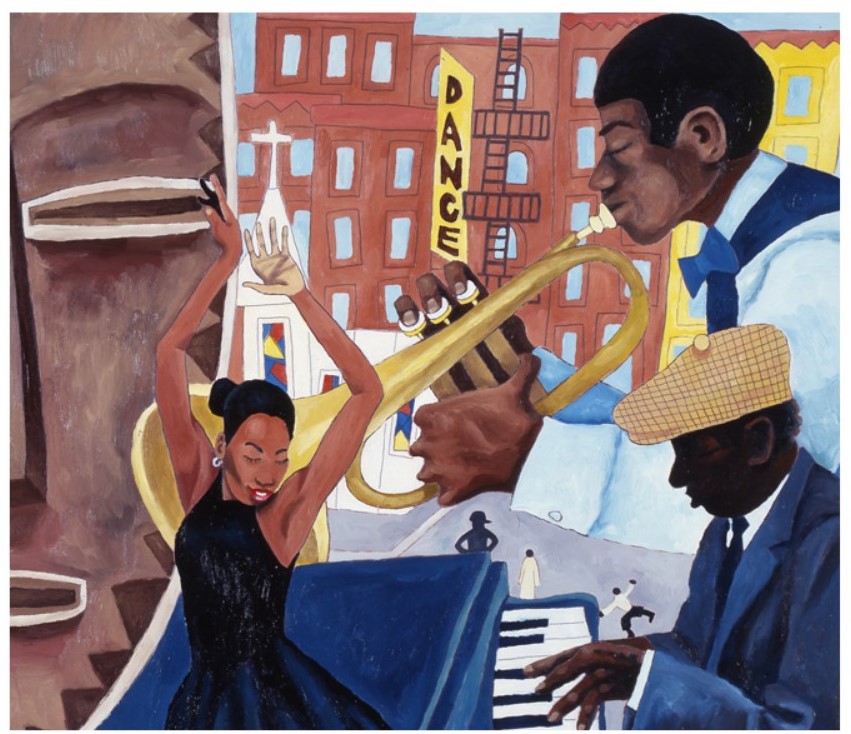
“I don’t make records for pleasure. I did when I was a younger artist, but I don’t today. I record so that I can feed people what they need, what they feel. Hopefully, I record so that I can help someone overcome a bad time.” – Marvin Gaye.
As a student at the University of Cincinnati, I was a member of the Racial Awareness Program (RAPP) – a program created to allow space and structure for students to engage in meaningful intergroup dialogue on issues of race and social justice. Every trimester we would take a retreat to explore race, culture, gender, socioeconomic class, sexuality, and other areas of difference. We would share our personal experiences and build on a shared commitment to creating a more just community. Many meaningful moments stand out, but there’s one that seemed to sum-up our time together.
After participating in a weekend of “race awareness” activities, each person was asked what they would do if they could wave a magic wand and create change. A member told the group, “honestly, it may sound shocking, but I would change the history of slavery because things didn’t seem to work out for African Americans.” She did not like how it felt to be a slave during the race awareness activities and was not interested in experiencing this her entire life. Over the next few months, we talked, learned together, and spent time walking in other people’s shoes.
By most accounts, she lived a privileged life and was the center of most interactions and institutions she participated in on campus. Even though she genuinely accepts others and is a quick study, she didn’t have much background knowledge of race relations. She didn’t have prerequisite familiarity and competences in key cultural areas, including civic engagement, education, and systemic racism, which inhibited her social justice development. To help her make that connection, we spent our time together discovering where these gaps of awareness and understanding were. We then put in a lot of work, plugging these holes with culturally relevant experiences and information to better understand issues. The goal was to begin the process of providing a substantial understanding of our culture in nine months.
Ending systemic racism is a long and deliberate effort. Our teachers must first acknowledge it exists, then research and learn culturally relevant curricula. Educators have to teach students to be antiracists deliberately. Lastly, we must develop lesson plans from the student of color’s perspective to address generational trauma and social-economic justice issues. We need an evidence-based teaching strategy that embraces our differences and enriches our learning experiences. Using a distinctive approach like this means that we empathize with students of color and understand their experiences as our responsibility too. By recognizing the personal experiences they come to school with, we connect their past state of fluctuation, education, and abilities to the convergence of their everyday lives.
My grandmother said it best. She would say, “everyone is blessed with at least one unique talent. Take time now to discover, define, and develop your talent. Don’t go to your grave with your untapped talent buried inside you.” Her point was that all students of color have unique capabilities. The key to helping them succeed is to engage in inspiring activities that capitalize on their educational experiences. While doing so, we unearth their talent by being familiar with the disparities from many heritages — cultural, socioeconomic, racial, and sex. We have to reach out to each other, regardless of our distinctive culture contrasts, enthusiasm, or particular kinships. This will fundamentally bring about change for every student — students who arrive in our schoolrooms each year, and potentially those who do not.
Fundamental change is what it’s going to take for the United States to bounce back from this global pandemic, economic, civil, and human rights crisis. Last week I spent time talking with my NAACP mentee while he was on the campaign trail, and we explored this issue. We spoke about past civil rights campaigns the “good old days.” After I told him a story about my time in Toledo, Ohio, and the 1964 Rambler I drove, he teased me. We laughed about how the passenger side floorboard had rusted out, and I would drive over puddles, so no one wanted to ride shotgun when it rained. We talked about the places I would go to and how owning my first car gave us a sense of empowerment. Even though they got wet occasionally, passengers benefited too.
We talked about how Ohioans have and always will rely on jobs from places like the auto industry and the recent stimulus package. As voters, students of color know what it means to have family members working over fifty-five hours a week on a Jeep line in Toledo. Now that we’ve lost so many jobs, those workers need help making ends meet. Maybe that’s why voters are so disappointed about politicians failing to pass a stimulus package. Like the stimulus package, the auto industry supports 1 of every eight jobs in Ohio, and many of these jobs are essential for students of color.
Amid a persistent barrage of fractious issues stemming from a lack of quality education, financial freedom, and adequate healthcare, we must encourage and cultivate civic engagement. After seeing how this impacts students of color, I started to wonder what the stimulus package’s long-term effects would be in places like Ohio and Georgia. Will this widening opportunity divide in public education, economic justice, and healthcare play out similarly in both states?
- Voters of color make up 33% of Georgia’s registered voters (30% Black, 2% Latino, and 1% Asian).
- Georgia has over 850,000 Latino residents, and 26% are eligible to vote.
- Nationally close to 52,000 Latinos turn 18 every month, and 9 out of 10 of those are eligible to vote.
- Latinos will account for 52% of Georgia’s new eligible voters.
Looking at a new study, it seems that the U.S. is on track to have a similar electorate as 2008, where the youth made up 18% of the vote. As witnessed on the state level in 2008, an energized student of color electorate gave President Obama the victory in Ohio, Virginia, and New Jersey (Georgia was close). While voters under 30 were 17% of the electorate for both Ohio and New Jersey in 2008, that number in Virginia was 21%.
- New Jersey’s Hudson county population grew by 4% to 634,266, and the Jersey City population increased 3% to 247,597.
- This is a substantial majority of Latino, African American, and Asian American city and has well over 95,000 key VOC.
Diversity in the electorate is good for our democracy. Students of color are key voters, and as demographics shift, with culture and community necessities transforming in the next decade, our politics will as well. First, our political leaders must listen carefully to students of color. Educators must keep an open mind while being persistent in constantly assembling and teaching evidence-based information and data. Lastly, future employers must analyze their approach and methodology to cultivate talent and help students of color thrive after they graduate. We must pin our ears back, reflect on our past, and encourage students of color to achieve their aspirations. Students are extraordinarily capable individuals, and they can accomplish amazing feats if we inspire and support them.
To be continued …
Kirk Clay is the President of Capitol View Advisors — a collaborative investing and acting on its values in creative and strategic ways to connect communities with the information and resources they need to support and further their aspirations.
 KirkClay.com